

First Red Wheel Plaque unveiled by the Transport Trust
[photo: Reg Banks]
On 3rd April 2009 the Transport Trust launched a nationwide programme to mark sites of historical interest with Red Wheel plaques. A major new initiative to commemorate Britain’s rich and globally important legacy in the development of transport, the Red Wheel programme marks hundreds of sites of special historic interest with a distinctive Red Wheel plaque administered by The Transport Trust, the hub of the transport preservation and restoration movement in Great Britain.
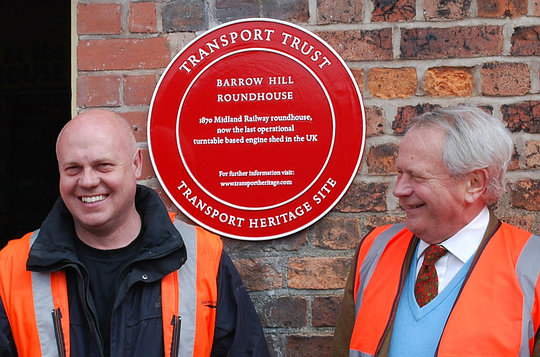
The picture shows Denis Dunstone (right) unveiling the first Red Wheel plaque at Barrow Hill Roundhouse with Mervyn Allcock, instigator of the preservation and refurbishment of the shed, a unique remaining example of 19th century railway architecture.
The former steam roundhouse located at Barrow Hill, near Chesterfield, had a working life of 121 years. It was Grade II listed in 1991, the same year it finally closed. Inside the roundhouse, as well as the turntable serving 24 engine roads, there is what is believed to be the only remaining set of timber locomotive lifting sheer legs - outlawed for heavy lifting in 1964.
Following many months of work by dedicated volunteers it opened its doors to the public in 1998. It is now home to one of the largest collections representing the era of diesel and electric traction as well as the days of steam.
To place each Red Wheel plaque in historical and geographical context, each has an website entry in our list of Red Wheel sites - which sets out the history and importance of the site, location and individuals associated with it.